The 2027 swim season is closer than it looks. For most brands, next summer’s range is being decided right now, while there is still time to develop samples, approve fabrics and book bulk production. This guide covers the design directions we are seeing in development requests and across the wider market, and, just as importantly, how to turn them into a focused, commercially sensible collection with your swimwear manufacturer.
One note before we start: trends are directions, not rules. The strongest collections usually take two or three ideas and execute them well for a clearly defined customer, rather than chasing every look at once.
Silhouettes: Sculpted Shapes and Easy Wear
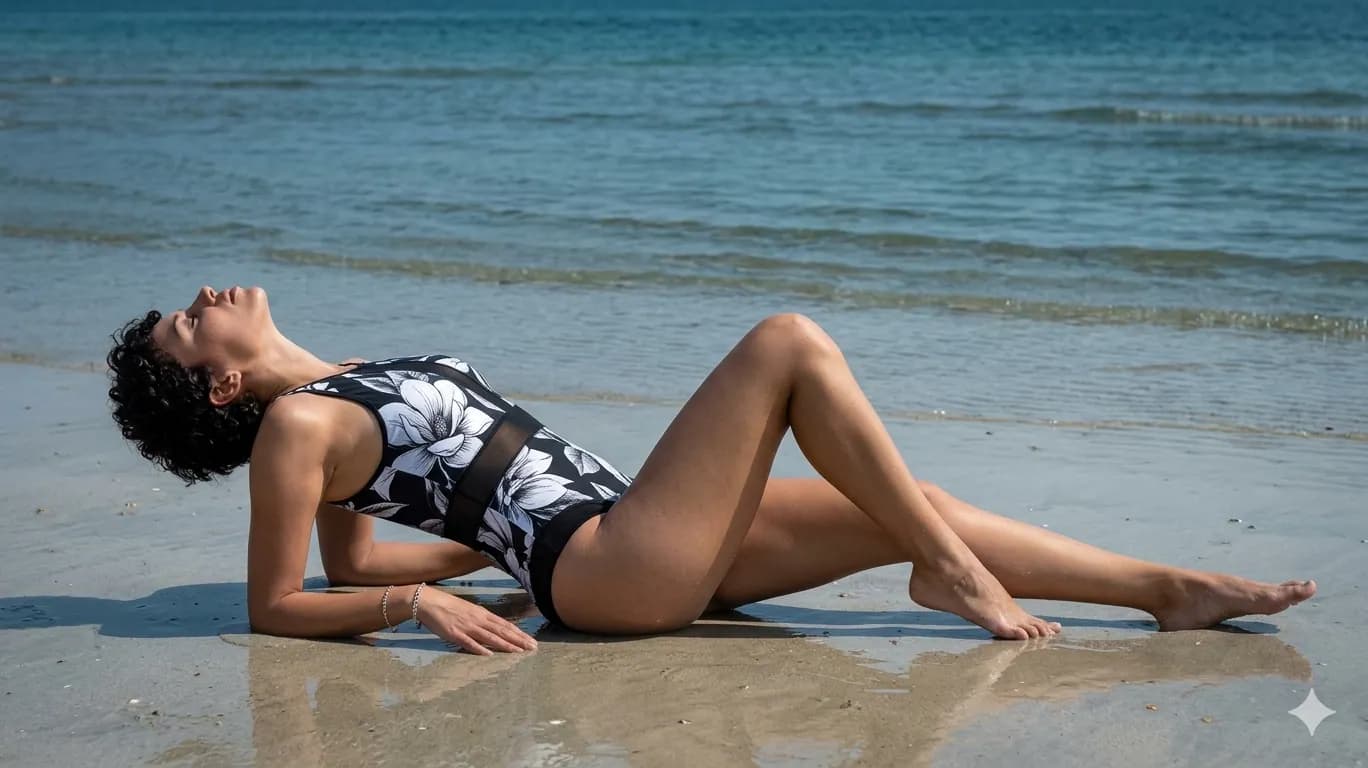
One-pieces continue to anchor many ranges, and the emphasis is on shape rather than decoration. Expect clean scoop and square necklines, higher leg lines balanced by fuller back coverage, and asymmetric one-shoulder styles that feel dressy without extra hardware. Internal construction is doing more of the work: soft shelf bras, light power-mesh panels and double-layer fronts give support while keeping the outside minimal.
On the bikini side, bralette tops, balconette shapes with removable cups and mid-rise bottoms are strong alternatives to the very small triangles of recent years. Many shoppers want pieces that feel secure enough for actual swimming, not just sunbathing, and that practical mindset shapes the whole season.
Color, Print, Texture and Details
Color stories are leaning towards warm, earthy neutrals such as sand, terracotta, olive and chocolate, cut through with a few saturated accents like cobalt, tangerine or bright citrus. Solid colors remain the commercial backbone, so it is worth planning your core shapes in solids first and layering prints on top.
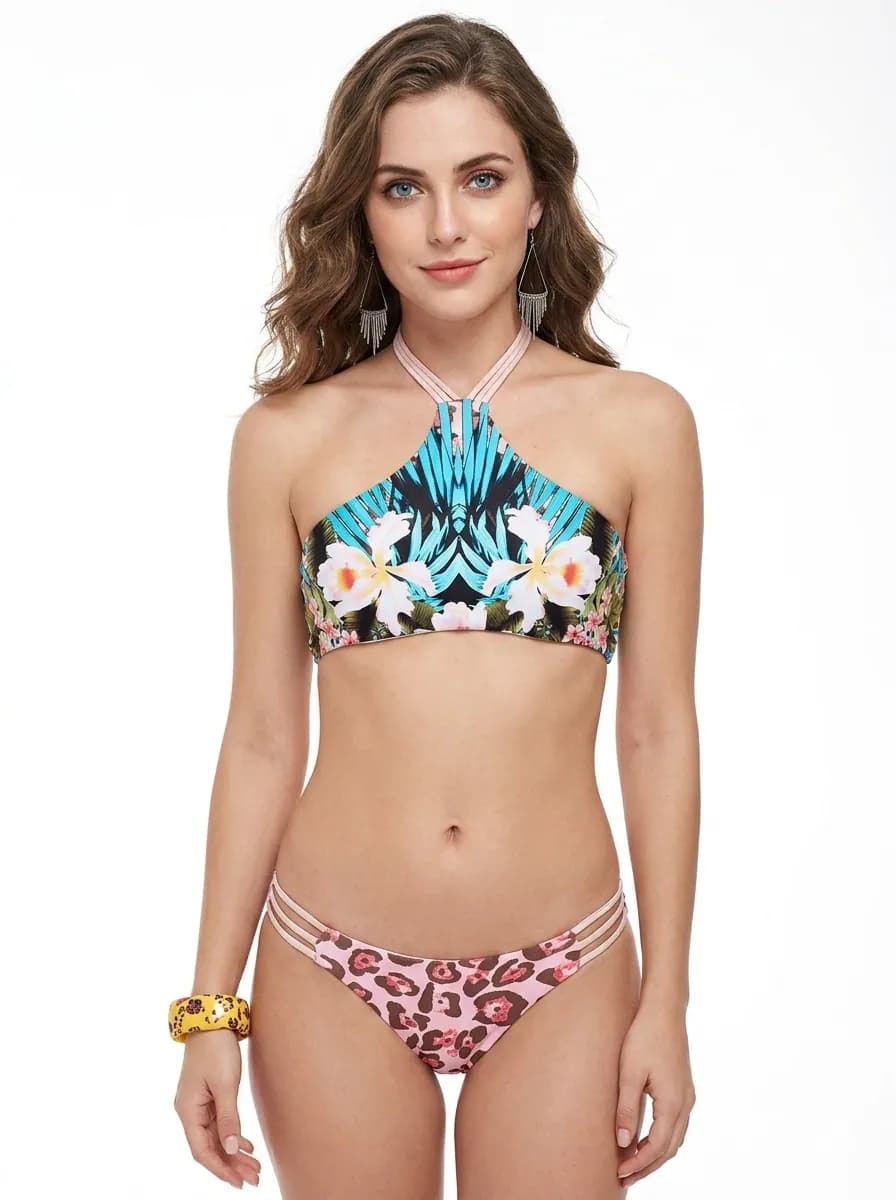
Where prints appear, they tend to feel either painterly and hand-drawn (watercolour florals, loose brush strokes) or graphic and retro (small geometrics, stripes, archival-style motifs). Placement prints that follow the body’s lines are a good way to make a simple silhouette feel special.
Texture is where swimwear can really stand out at shelf level:
- Rib knits add depth to solid colors and flatter a wide range of body types.
- Crinkle and seersucker-effect fabrics create a relaxed, vacation feel and photograph well online.
- Jacquard and textured-knit fabrics give tonal patterns without printing.
- Metallic and shimmer finishes work best as small capsule drops rather than the core range.
Textured fabrics behave differently from standard swim jersey, so ask your factory for a small test swatch before committing a full style to them.
Cut-Outs, Mesh and Hardware
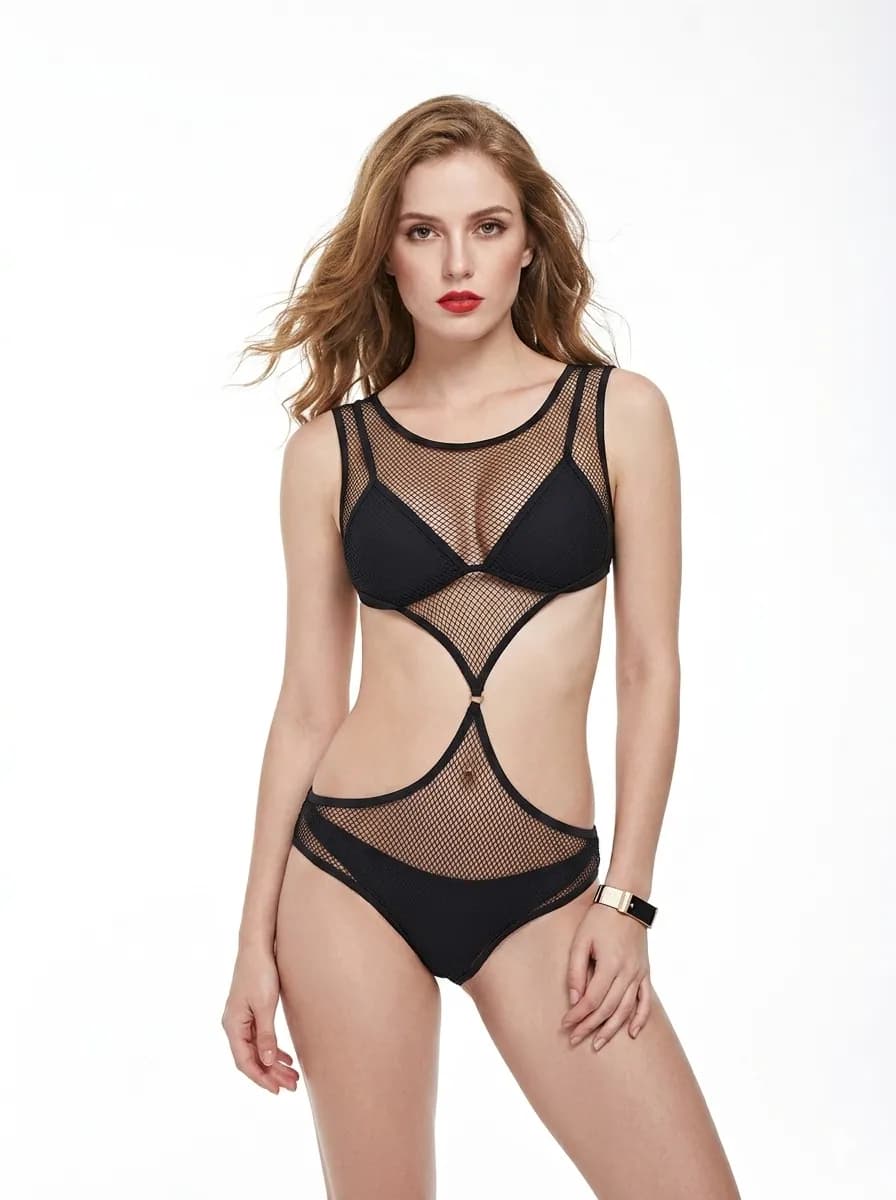
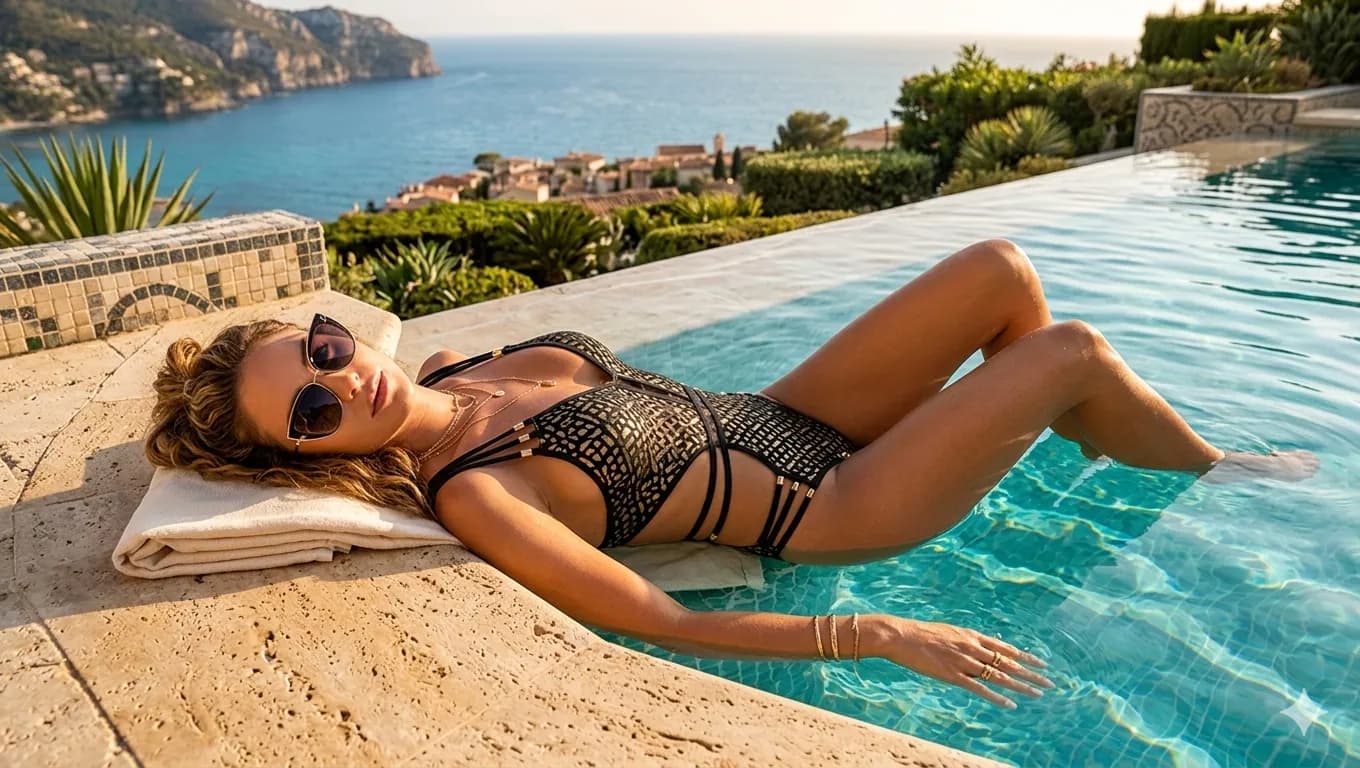
Cut-outs are still present, but they are becoming more considered: a single keyhole at the center front, a side cut-out on a one-piece, or an open back balanced by a secure neckline. Sheer mesh overlays and mesh inserts add interest without extra exposure. Hardware is moving towards tonal rings, tortoiseshell-effect trims and matte finishes instead of shiny gold.
Every detail has a production cost. Rings and trims must be tested for chlorine and saltwater resistance, and complex cut-outs increase sewing time. A good swimwear manufacturer will tell you early which details add cost or risk, so you can decide what is worth keeping.
Sustainable Fabrics, Modest Styles and Sun Protection
Recycled nylon and recycled polyester blends are now a standard request rather than a niche option. If sustainability is part of your brand story, plan for it from the beginning: recycled fabrics can have different color ranges and lead times, and you will want supporting documentation from the fabric mill.
At the same time, demand for more coverage is broadening. Long-sleeve swimsuits, rash guards, swim leggings and high-neck tops are no longer only for surfers or modest-wear shoppers. Many customers simply want sun protection and comfort for active days on the water. Chlorine-resistant fabrics are also popular with buyers whose customers swim regularly in pools. These categories sit naturally alongside women’s swimwear and can extend into yoga and activewear using similar fabrics.
Turning Trends into a Tight Collection
Trends only matter if they reach the shelf on time and within budget. Here is how we recommend working with a factory on a private label swimwear collection:
- Start with your core blocks. Choose a small number of proven fits and apply trend details to them rather than developing every style from scratch.
- Limit your fabric base. Two or three main fabrics across the range simplify sourcing and quality control.
- Plan MOQs early. At Closswim, our minimum is 200 pieces per style per color and 400 pieces per order, so it helps to decide which styles run in several colors and which are single-color capsules.
- Sample smart. Samples take around 7 days once design and fabric are confirmed, so send clear tech packs or reference pieces to avoid extra rounds.
- Leave buffer for bulk. Bulk production usually takes 2–4 weeks after sample approval, plus shipping time to your warehouse.
You can see how the full process works, from brief to shipment, on our how it works page.
Mix-and-Match Separates
Separates remain one of the most effective ways to increase basket size. Offering two or three top shapes and two or three bottom shapes in the same colors and prints lets customers build their own fit, and helps you serve different body types without multiplying your design count. It also makes inventory easier to manage, since tops and bottoms can be re-ordered independently based on sell-through.
Start Your 2027 Development Now
Closswim has been making custom swimwear for brands in Europe and the US since 2009, in our own factory. Whether you are refreshing a core range or launching a new line, we can help you choose fabrics, refine details and sample quickly. Contact us with your ideas or tech packs to request samples and a quotation for your 2027 collection.